How to Paint with a Palette Knife: Techniques for Bold Texture
What Is Palette Knife Painting
Palette knife painting is a technique where paint is applied with a flexible metal blade instead of a brush to create bold, dimensional marks. Rather than blending color smoothly, the knife lays paint onto the surface in distinct layers, allowing light to catch the texture and colors to mix visually instead of mechanically. This approach produces a more physical, sculptural result and encourages artists to simplify shapes, work decisively, and build form through color planes rather than line.
Artists turn to palette knives when they want energy, texture, and decisive mark-making that feels physical rather than illustrated.

Unique Techniques with Palette Knives
How Do You Paint with a Palette Knife?
To paint with a palette knife, load thick paint onto the blade and apply it directly to the surface using controlled pressure rather than brushing motions. Instead of spreading paint thinly, the knife deposits color in distinct layers that can be smeared, pressed, or lifted to create texture and broken color effects. Artists work with heavy-bodied paint, minimal medium, and deliberate strokes to build form through shape and light rather than detail.
Core Palette Knife Techniques (That Build Real Skill)
1. The Load-and-Lay Method
Pick up paint without mixing. Lay it down once.
This preserves color clarity and creates vibrant transitions.
2. Smear for Broken Color
Drag lightly so underlying paint catches through.
This creates visual vibration—essential in landscapes and abstracts.
3. Press-and-Lift for Impasto Peaks
Apply pressure, then lift cleanly.
This builds dimensional ridges that hold light.
4. Edge Carving
Use the knife edge like a chisel to define planes or highlights.
5. Scraping Back (Subtractive Painting)
Remove paint intentionally to reveal earlier layers.
This adds depth faster than adding more paint.
Why Artists Paint with a Palette Knife Instead of a Brush
Palette knives create effects that are difficult—or impossible—to achieve with bristles:
- True impasto: Thick paint retains peaks and ridges.
- Broken color mixing: Colors merge optically on the surface instead of blending into mud.
- Clean, confident marks: No feathering or over-blending.
- Physical texture that reflects light: The painting changes as you move.
- Faster decision-making: Encourages bold, simplified forms.
- No brush drag: Paint sits on top of the surface rather than soaking in.
This makes knife painting especially powerful for landscapes, florals, abstracts, and expressive realism.
Common Challenges When Starting Palette Knife Painting
Artists new to knives often struggle not because the technique is difficult, but because they approach it like brushwork.
Typical issues include:
- Using paint that is too thin to hold texture
- Overworking passages instead of placing deliberate strokes
- Trying to draw details rather than build shapes
- Mixing colors too completely before applying them
Palette knife painting rewards decisiveness. Each stroke should be placed with intention and left alone.
Essential Tools for Successful Palette Knife Painting
Choosing the right tools and art materials including palette knives, heavy-body paint, and textured painting surfaces can make a significant difference in the final result.

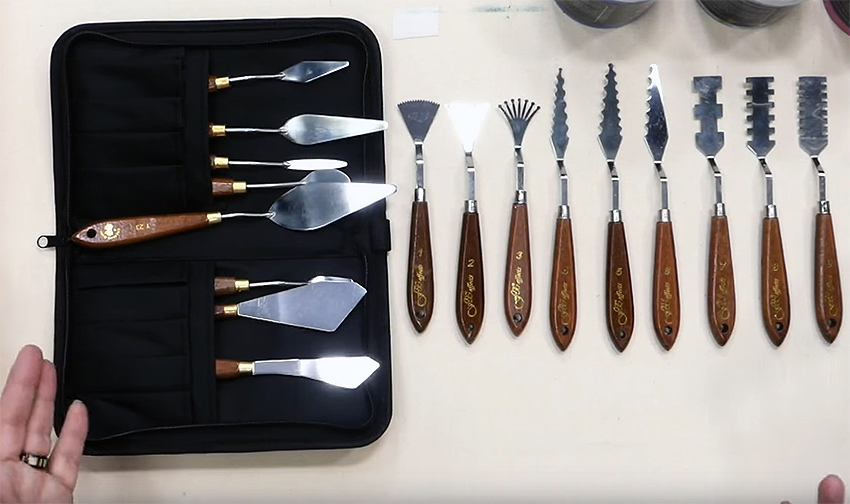
| Shape | Best Use |
|---|---|
| Diamond / Trowel | General painting, planes, and controlled spreading |
| Long Blade | Sweeping landscape strokes |
| Small Pointed | Detail accents and edge carving |
| Rounded Edge | Soft organic forms like clouds or petals |
| Offset Knife | Keeps hands out of wet paint |
A flexible blade creates softer transitions. A stiffer blade produces sharper, architectural marks.
The Right Paint Consistency (Critical for Success)
Palette knife painting depends more on paint body than color choice.
Use:
- Heavy-body acrylics
- Artist-grade oils with strong pigment load
- Paint straight from the tube whenever possible
Avoid:
- Thin paints
- Excess medium
- Over-mixing before application
If paint slides like frosting, it’s perfect.
If it drips, it’s too thin.

| Surface | Result |
|---|---|
| Stretched Canvas | Slight bounce creates organic texture |
| Linen | Beautiful drag and broken marks |
| Rigid Panel | Sharpest edges and maximum control |
| Heavy Paper | Good for studies, less for thick buildup |
Incorporating palette knives into your artwork can help infuse it with a unique brand of expressiveness. Before anything else however you must choose one whose shape and size cater suitably towards achieving specific effects desired by you.
Subjects That Work Especially Well with Palette Knives
This method shines where structure matters more than detail:
- Landscapes with shifting light
- Floral masses rather than individual petals
- Architectural planes
- Seascapes
- Abstract compositions
- Expressive portrait accents
Think in blocks of color, not lines.
Why Artists Choose Palette Knives Over Brushes
Artists turn to palette knives when they want energy and structure that brushes naturally soften. A knife does not leave bristle marks or absorb paint; it deposits color cleanly onto the surface, allowing thicker applications and more vibrant transitions between hues.
Palette knives are especially valued for:
- Creating rich impasto and surface texture
- Preserving color clarity without over-blending
- Building paintings quickly with confident strokes
- Producing broken color effects ideal for landscapes and abstracts
- Allowing subtraction as well as addition by scraping paint away
This makes knife work both expressive and efficient.
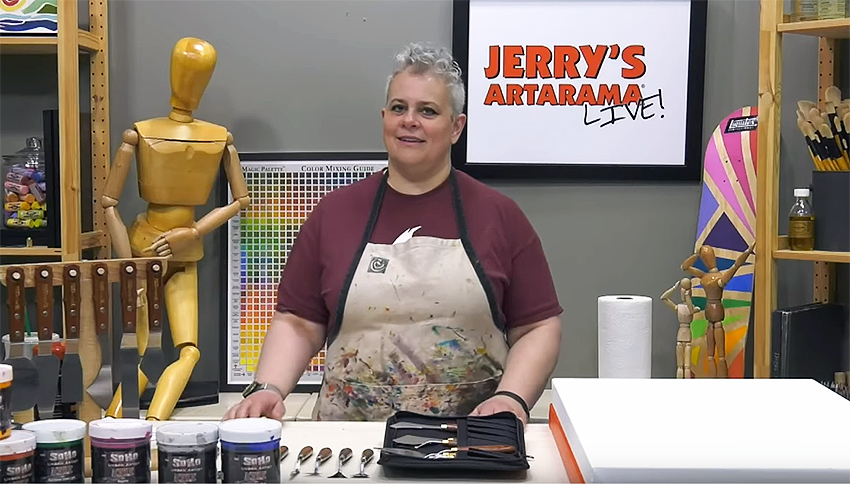
SEE VIDEO Jerry’s LIVE Episode #96 – Painting & Palette Knives: Unique Techniques
Palette knife painting invites artists to think differently about paint—not as something to smooth and control, but as a material to build with. Whether used for bold landscapes, expressive florals, or abstract compositions, the knife encourages clarity, movement, and physical presence that bring a surface to life.
Featuring: Painter’s Edge XL Palette Knives Set of 6, Paramount Professional Gallerywrap Canvas
Supply List: Painting & Palette Knives: Unique Techniques, Tips & Tricks (Painter’s Edge XL Palette Knives Set of 6, Paramount Professional Gallerywrap Canvas)
Variety really is in fact going to spice up this endeavor altogether so endeavor applying various angles/directions/pressures as was earlier suggested – thereby experimenting until things flesh out into textured abstract paintings carrying bold strokes/features/impasto effects , direct color blending onto canvases inclusive.
For Amazing Effects We recommend: FX Special Effects Palette Knives by Creative Mark
Most Widely Used Poplar Shapes: Painter’s Edge Painting Knives & Sets by Creative Mark
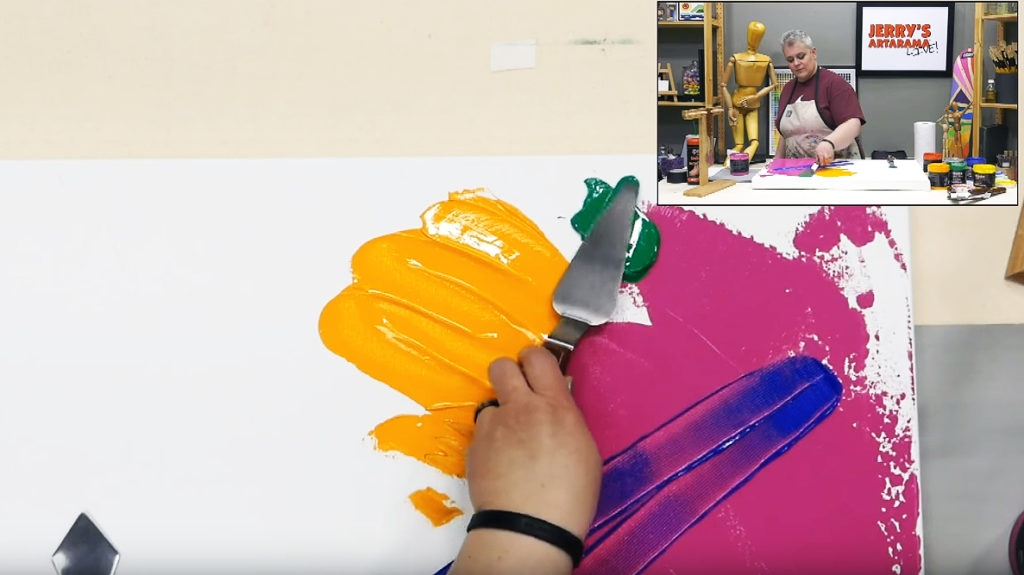
One advantage presented by using such tool elsewhere invalidates any doubts radiating from lackluster/suffering artistic abilities – as its inclusion invites spontaneity and freedom into one’s painting process.
This versatile instrument is also the go-to for various approaches, including adding highlights and details, in order to produce art possessing its own unique style liberated by an unleashed sense of creativity.
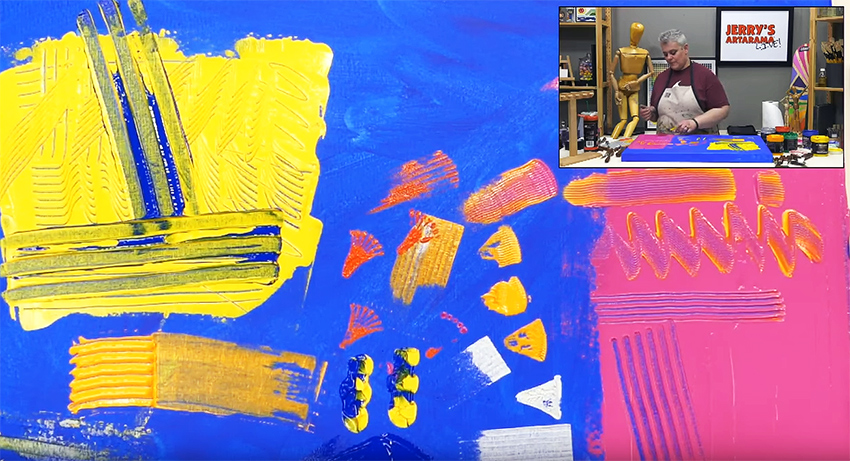
Frequently Asked Questions
What Kind of Paint Works Best for Palette Knife Painting?
Heavy-body acrylics and artist-grade oils work best because they hold shape when applied. Thin paint collapses and cannot maintain the dimensional texture that defines knife painting.
Is palette knife painting only for thick paint?
Mostly yes. The technique depends on paint holding structure.
Can beginners use palette knives?
Absolutely. Many find knives easier because they eliminate detail anxiety.
Do you mix colors on the palette first?
Lightly—but allow mixing to happen on the surface for livelier results.
Can you combine brushes and knives?
Yes. Many artists block with knives and refine selectively with brushes.
How do you clean palette knives?
Wipe immediately. For oils, use solvent; for acrylics, clean before drying.
More Resources